
An anecdote about Scoping and Art
2026-02-16
One of the most amazing things about figuring out the essence of something is to discover it in an unexpected place. Everything else changed, all the details, but the permanence within change is still there. The web of instances can then be combined in a single explanation to get your point across.
Better yet is to be able to tell a short story of the abstract and generic phenomena materializing itself in front of you. Today, we will go over something of that nature in order to bridge intuition and technical abilities.
The Quality Without a Name
One of the most striking things about the book Patterns of Software is its hypothesis for the first half of the piece. Gabriel got in touch with the literature of Christopher Alexander, someone from the architecture realm. The lisper then identified that the property Alexander was seeking to define and to explore, the so-called quality without a name, is something relatable in software as well.
The story the book describes is one of investigation. Gabriel, by dissecting Alexander’s work, aims to explore and detail this mysterious property whilst making parallels with software development. If Alexander wanted all his buildings to have this precious property, our software would also benefit from having it. The problem, however, is that this property is so vague and foggy that we have a hard time defining it in precise terms. Alexander’s goal, with an attempt to define it, was to find a mechanical process or recipe that would guarantee the final product to have it. At the time, for this particular goal, they failed (both Alexander and Gabriel), although more steps to this story have been made since then. But, for the purposes of this post, any recent developments on this inquiry are not necessary.
The quality-without-a-name’s major quirk is peculiar. Some people claim they are able to identify it, even though they can’t define it. This selective group of people uses a bunch of vague terms to talk about it, such as “elegant”, “divine”, “it just clicks”, or “simple”. In fact, one could argue that the entire pursuit of simplicity is a major cover-up to actually mean the quality without a name instead. Simplicity, by being such a vague and imprecise term as the quality-without-a-name, fits the bill just nicely.
Craftsmanship
Think about it. Everyone understands the problems C programs make you undertake, yet many people use it under the premise that it is the language that “keeps things simple”. Of course, once you understand that the correct abstractions for the correct problems are the actual source of simplicity, the lack of expressiveness of C starts to fall apart, and its simplicity turns into scarcity. The workarounds start to feel like patch-ups due to the limitations on expressing one’s will; after all it is the computer’s job to encode the solutions of the mind and not the other way around.
Still, there is something in there, in those C programs, that if done right, and the problem arranged in a way that the limitations are distant from your sight, it just clicks. And you know it. I know it. You and I look at the same code snippet, and a current of satisfaction sparkles. Sadly, even though our eyes are shining with joy, our Javascript friend thinks we are going crazy. We are lunatics. And worse, we think the same of him, but for a different reason.
A follow-up hypothesis of mine, this one more speculative, is that one’s level of blindness about this quality is at least related to one’s experience writing software and caring about what is being written. The variety of principles and techniques learned throughout your career start to build in you some sort of craftsmanship. This polishing process starts to add to you a sense of taste and caring, which leads to the development of expertise. Experts are great at judging products of their realm quickly, especially when identifying the great ones.
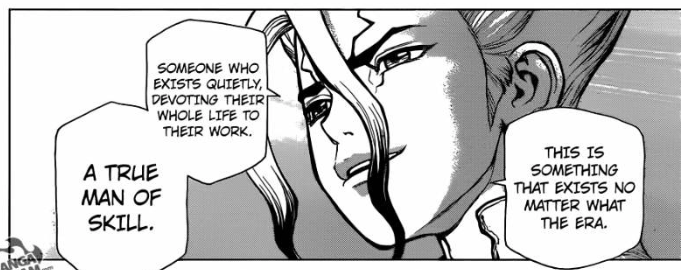
Even more speculative, I would even say that for some people, the expertise gained is just a consequence, not the target. The real effect of the acquired taste is the pursuit of something worthwhile. Something beautiful. Something meaningful. Something words cannot describe. Yes, more vague words. Thus, it is not a coincidence that little cracks here and there start to bother those people. This explains why popularity or hot trends in software are of no interest to those people for the sake of being popular: they seek the right tool for the job, regardless of whether it has 5 or 50 years of age. Big tech companies using such something also means nothing: usually real art is made on an individual basis, not on big corporate conglomerates. It should be a surprise to no one that something with a bigger craftsmanship spirit, similar to the descriptions in Dealers of Lightning and The Soul of a New Machine, is the kind of place where big innovations are made. If you aim for greatness, money comes as a consequence if rightfully managed. The other way around does not work by principle; the rule of thumb becomes stagnation and bad designs. Exceptions to this latter rule are made by cheating the game somehow.
Scoping
Here I was on a Friday night, 02/13/2026, doing some pair programming with my friend Marinho on our hobby project, Karuta. We were implementing scoping for our ML-like module system. During this endeavor, we got stuck on a particular issue: refactoring.
The code being refactored was centered around lookup functions for our signatures, modules, and predicates. Last time we touched that code, we created something capable of identifying if something is in scope to be used at that moment, and if not, errors would be reported to the user. That was it. Happy and productive code.
However, on that particular night, we’ve decided we wanted to be able to return where in the lookup process we stopped. This artifact would be of great use for us in other parts of the compiler. The sad part: the code was done in such a way that fulfilling this double functionality was not possible. Something would have to change. And it was not clear to us what it was and how we would accomplish this change.
In hindsight, we were suffering due to the fact that we care about the quality without a name. This is not
something you actively care about; it starts to become natural to you after a while. To put it in
words, here’s a slightly changed quote from a favorite movie of mine that perfectly describes our situation:
This ain’t no dead piece of text. Code’s a living breathing thing. She’s alive. You feel her talking to you, telling you what she wants, what she needs. All you gotta do is listen.
And we tried to listen. We stopped writing and started looking at the code, line by line. Our brains were trying to identify what was needed in there that would not only solve the problem but also solve it in a nice way, whatever that means. And it builds anxiety: you actually hear the code telling you something is wrong, but figuring out how to implement what it needs is tricky. Sometimes the language you are working on does not have the feature. Sometimes the solution can be found in an obscure code snippet another nerd made, but you may not be aware of it. Sometimes you just don’t know, yet you know something must exist to fix it. Some situations are so bad that the telling actually morphs into screaming, and you know in every inch of your being that something is fundamentally wrong with it, even though you can’t really express or point to where and why. As frustrating as it is, this usually leads to the best solutions to problems in my experience.
One could say: “just copy paste the code, and try your best to make the common parts common functions”, which was an option. But thinking of using that solution felt like a crime. Something without honor. Something that does not seem right. Something that does not feel right. Yes, more vague words. And the craziest part: it was mutual. Both Marinho and I felt it, even though we would not be able to explain it to a stranger.
This happened multiple times already with me, especially when doing hobby projects. And I am especially grateful Marinho is also able to identify it; otherwise nobody would understand the standards of nobody. Lo and behold, we were right: after looking at some versions of these functions, written just for the sake of comparison, something came out of it. Something that seemed to fit it nicely. Something we were proud of. Something we would like to hang on the wall. Yes, more vague words. A beautiful generic function using polymorphic variants that could perform double duty with a great and understandable API.
Conclusion
One may look at this post and say I am crazy. Fair enough. I accept that possibility. But I don’t think I am. Alexander noticed this in architecture, Gabriel in software, and so many movies lead us to believe that craftsmanship in many other areas has something special. Something that, at one point, we thought machines would automate its reproduction. We were wrong. The market of commodities does not care about little details artisans leverage in their hand-made craft. Now we think AI can. Are we wrong on that one as well? Time will tell, I assure you of that.
What I do know is that my expectations are clear: I am prepared to have conversations with my code more
frequently as I progress into reading about code and writing more code. The more techniques I acquire, the more it will talk
to me. The more egregious mistakes I see, the louder it will get. This unilateral communication sounds like
a curse, but it isn’t: there is nothing more satisfying than to see your craft come into fruition leveraging
everything you know and everything you trained yourself to perfect. It is as if the entire quiet time you devoted
yourself to your work actually paid off for once; even though you know the pursuit will never end. If you can hear it,
you should be grateful. I know I am.
No? Maybe you can’t hear it then. Maybe you ought to start hitting those books.